
Journal ·
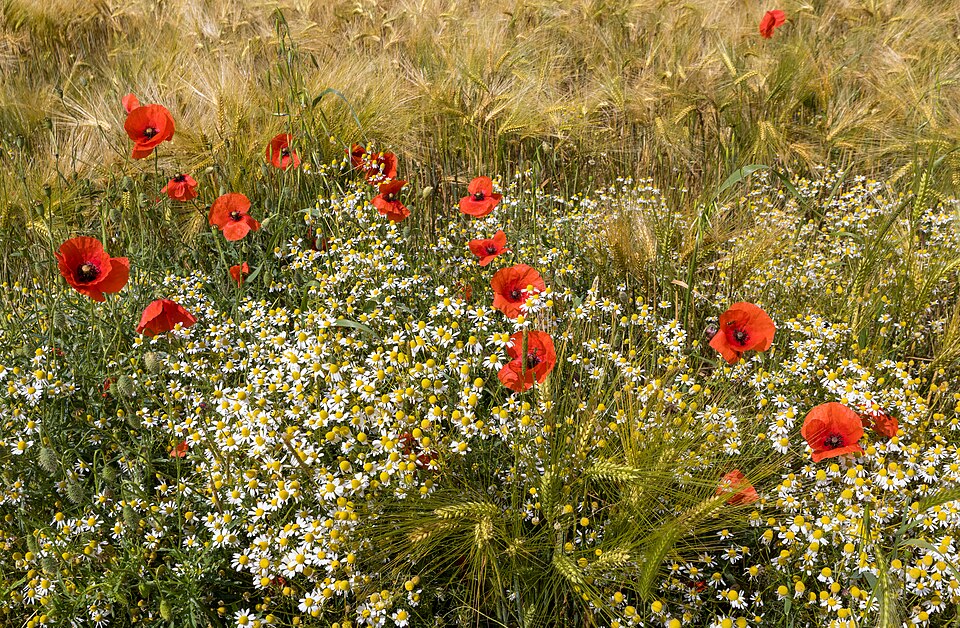
Chamomile Flowers
Chamomile is the most famous sleep herb in the world. The US government's own summary found one study on insomnia, and it showed no benefit. The good evidence is for something else entirely.
The Sleep Herb Nobody Tested For Sleep
Season 1 · Episode 9
Ask anyone to name a tea for sleep and you'll get one answer. Chamomile is so completely fused to bedtime that the association does the work of evidence, and almost nobody checks whether the evidence is there.
Here is what the US National Center for Complementary and Integrative Health says about chamomile and insomnia, in its own words:
"There's very little information on chamomile's effect on insomnia. A 2019 review of chamomile use found one study on insomnia, which found no benefit from its use for this sleep disorder."
One study. No benefit found.
That isn't a fringe blog. It's the federal body whose job is summarising exactly this kind of question, and it's blunt about it.
The evidence that does exist is for something else
The interesting part isn't that chamomile is unsupported. It's that the real evidence points somewhere adjacent, and got relabelled on the way to the tea aisle.
The best-studied use is anxiety. Amsterdam and colleagues ran a randomised, double-blind, placebo-controlled trial in 2009 on patients with mild to moderate generalised anxiety disorder. Sixty-one people enrolled, fifty-seven were randomised, eight weeks. They saw a significantly greater reduction in anxiety scores on chamomile than on placebo.
That's a genuine result. It is also one modest trial, and it was not testing sleep.
And the preparation matters more here than in almost any herb we've covered. That trial used pharmaceutical-grade German chamomile standardised to 1.2% apigenin, in 220 mg capsules, dosed up to five capsules a day. That's over a gram of standardised extract daily.
A cup of tea made from three quarters of a part in sixteen and a half is not that. It isn't a smaller version of that. The dose, the standardisation and the extraction are all different, and the evidence does not carry across the gap. That's the same error the nettle episode turned on, and the ginger one.
Which chamomile, and why it matters
"Chamomile" is one word covering two different plants.
German chamomile is Matricaria chamomilla, also written M. recutita, an annual. Roman chamomile is Chamaemelum nobile, a low creeping perennial. Wikipedia's article on the Roman plant puts the distinction in its own voice: although it's often confused with German chamomile, "its morphology, properties and chemical composition are markedly different."
Ours is German. We know that from the supplier listing for what's actually in the pouch, which names Matricaria recutita.
You'll also see it sold as "Egyptian chamomile," and that trips people up. Egyptian is a growing origin, not a species. Egypt is the dominant commercial source for German chamomile, and that's all the word means. It is not a claim about antiquity, and it shouldn't be turned into one.
The name is the smell
Pick a flower and crush it and you get apples. Faint, dry, unmistakable.
That scent is the name. "Chamomile" comes from the Greek khamaimelon, earth apple, from khamai, on the ground, and melon, apple. It was named for smelling like apples growing low to the soil, and the name has survived every language it passed through.
Worth being precise about one thing, because it would be easy to overclaim: both species carry that name. Chamaemelum has the same root. The etymology tells you about the smell, not about which plant is in your cup.
The blue oil, and where the blue comes from
German chamomile's essential oil is deep blue, which is why it's sometimes sold as blue chamomile. The colour is chamazulene.
The strange part is that the blue isn't in the flower. Chamazulene is created during steam distillation, from a colourless precursor called matricin. You can't find the blue by looking at the plant, because until you distil it, it doesn't exist.
There's a related compound worth naming. Chamazulene carboxylic acid behaves like a naturally occurring profen, selectively inhibiting the COX-2 enzyme. That's a real described mechanism, and it's the sort of thing that gets flattened into "anti-inflammatory" on a label without anyone mentioning that a mechanism in a laboratory is not an outcome in a person.
Apigenin and the receptor
The mechanistic story behind chamomile's calming reputation is apigenin, a flavonoid that binds to benzodiazepine receptors.
That binding is real and it's genuinely interesting. It's also largely laboratory work, and it explains why an effect might exist rather than demonstrating that it does. Mechanism and outcome are different claims, and chamomile marketing has spent decades treating the first as though it settled the second.
In the blend
Chamomile flowers are three quarters of one part in sixteen and a half, one of the smaller shares.
Under the Ratio Doctrine a herb enters at the proportion that holds the blend in balance, not the proportion that makes it loudest. Chamomile is soft and apple-sweet and would be very easy to lean on, precisely because everyone already expects it to be there. It's in at a small share because the blend doesn't need it to carry the reputation it arrived with.
What we're actually claiming
Nothing, medically. This is history and culture.
What we can say plainly is this. Chamomile is one of the most studied herbs in the world and one of the most overclaimed, and both are true at once. The record is real, and it's small. The anxiety trial is worth knowing about. The sleep reputation is enormous and the sleep evidence is one study that found nothing.
A plant can be worth drinking without being worth the claims made for it. This one has been carrying somebody else's reputation for a very long time.
Further reading
Sources consulted for this article and its episode are listed at the bottom of the page.
Photograph: JackyM59, CC BY-SA 4.0, via Wikimedia Commons