
Journal ·
Dandelion Leaf
Most folk plant names guess at how a thing looks. Dandelion has two names, and the older one is an accurate observation about what the plant does to the body.
The Weed That Was Planted On Purpose
Season 1 · Episode 8
Almost every folk name for a plant is a guess about its appearance. Lungwort has spotted leaves that somebody thought looked like a diseased lung. Toothwort has tooth-shaped scales. The names record what people saw, and the medicine was inferred backwards from the resemblance.
Dandelion has two folk names. One of them follows that pattern exactly. The other does not, and it's the one nobody says out loud.
Lion's tooth, and the other name
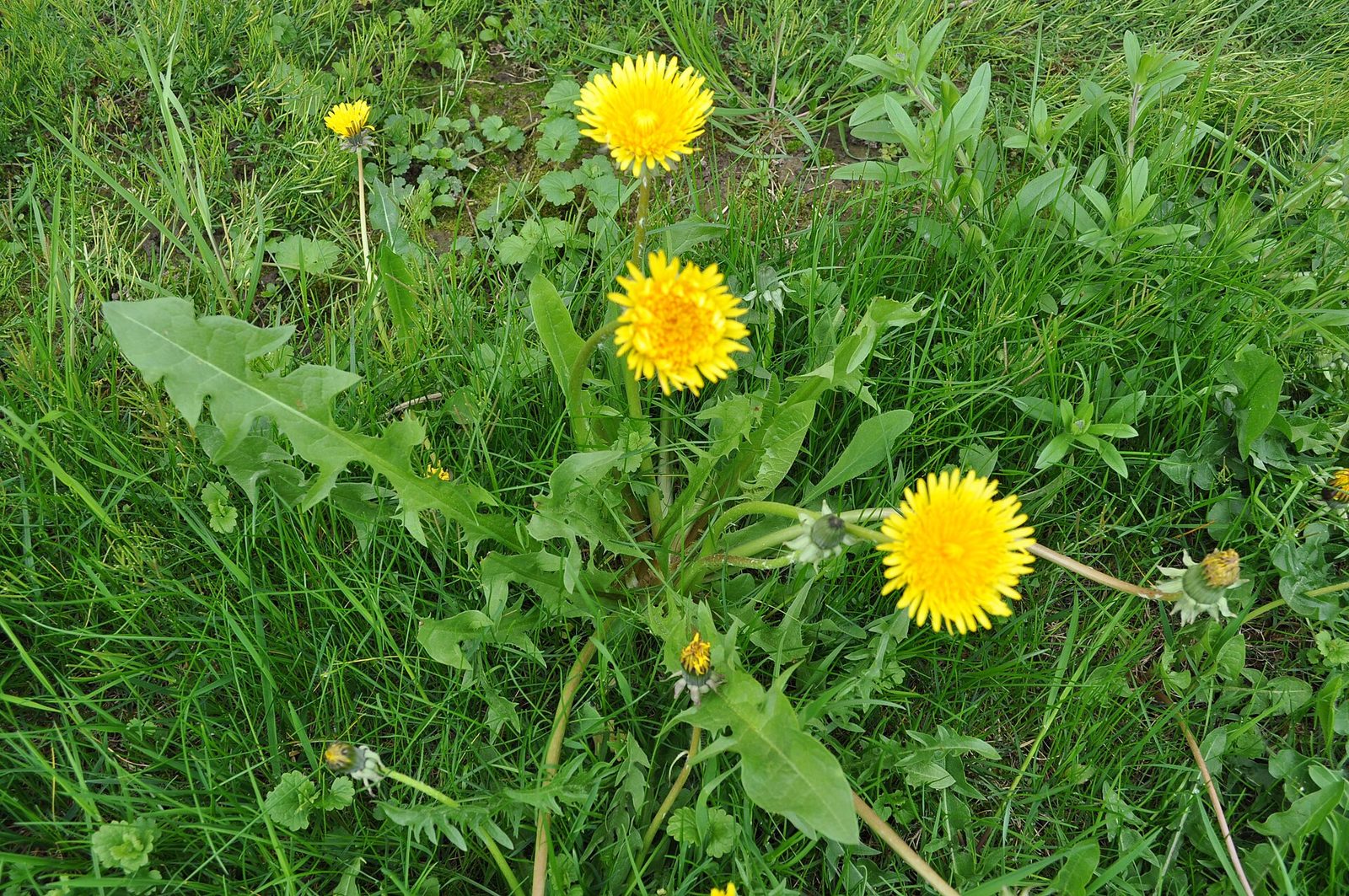
The polite name is the shape. Dent-de-lion, lion's tooth, for the jagged margins of the leaf. It came into English from French, and the same image runs through German Löwenzahn and Italian dente di leone. A guess about appearance, and a perfectly good one.
The other name describes what happens after you eat it. The French call the plant pissenlit. The English called it piss-a-bed. Both are old, both are blunt, and both are claims about physiology rather than botany.
That's rare enough to stop on. A folk name that reports a bodily effect, rather than a resemblance, is a different kind of observation. It means somebody ate the plant, noticed something, and named it for the noticing.
Culpeper put it in the title
Nicholas Culpeper, writing in 1653, did not treat the vulgar name as an embarrassment. He used it. The entry in The Complete Herbal is headed, exactly:
DANDELION, VULGARLY CALLED PISS-A-BEDS.
And the observation isn't only in the heading. His virtues section says the plant "opens the passages of the urine both in young and old."
Two things in that entry are worth recording. He files dandelion under Jupiter, not Venus, which is worth saying because his astrological assignments get misremembered constantly and the primary text is unambiguous. And the urinary action sits inside a larger claim about the liver, gall and spleen. That framing is the direct ancestor of every "liver support" and "detox" label on a dandelion product today. The tradition and the marketing share a root.
He closes the entry with a complaint about his own profession, which tells you as much about Culpeper as about the plant:
You see here what virtues this common herb hath, and that is the reason the French and Dutch so often eat them in the Spring; and now if you look a little farther, you may see plainly without a pair of spectacles, that foreign physicians are not so selfish as ours are, but more communicative of the virtues of plants to people.
The weed was planted on purpose
Here is the part that reorganises everything else.
Dandelion is not native to North America. Colonists carried it across the Atlantic deliberately and planted it, as a food crop. It was brought here on purpose, by people who wanted to eat it.
Everything since is the story of a crop that got out. It spread into pastures, roadsides and eventually lawns, and at some point the descendants of the people who planted it started buying chemicals to kill it. The plant did not change. The lawn arrived, and the category changed around it.
There's a second quiet strangeness. The North American plants are triploid and reproduce by apomixis, setting seed without fertilisation. The seed is genetically identical to the parent. A field of them is closer to one plant repeated than to a population.
That makes dandelion the third plant in this blend that travels as a copy rather than a lineage. Peppermint is a sterile hybrid that moves only by runner. Ginger has no wild population anywhere and moves only by division of the rhizome. Three of the sixteen and a half parts in Buckshot & Gunpowder are carried by hand rather than bred.
The other dandelion made rubber
Taraxacum kok-saghyz, the Kazakh dandelion, is a different species, and its roots produce real natural rubber. The Kazakh name means "green rubber," and the latex was chewed as a gum.
Soviet scientists identified it in 1932 while looking for a rubber supply that didn't depend on tropical imports, and it was farmed at scale in the USSR. It is not the plant in the cup, and the two get conflated often enough to be worth separating.
What the leaf actually carries
The nutritional figures are not modest, and they're the least disputed thing about this plant.
Raw dandelion greens run around 397 mg of potassium per 100 g. Vitamin K sits near 778 mcg per 100 g, among the highest of any common leafy green. A cup of the raw greens is roughly 25 calories.
There's a coherence worth noticing there, though it isn't a claim. Anything that increases fluid loss also takes potassium with it. This particular plant happens to arrive carrying potassium.
The measurement, at its real size
So the name is four hundred years old, it exists in several languages, and it makes a specific physiological claim. What happened when somebody measured it?
Once. Clare, Conroy and Spelman published the only clinical study on dandelion leaf in 2009. Twenty-eight people enrolled. Eleven dropped out, citing the difficulty of collecting and measuring their own output. That left seventeen healthy women, for a single day, with no control group.
And total daily urine volume did not increase significantly.
That is the entire clinical record for the leaf. Everything else is traditional use written into a regulatory monograph, or laboratory and animal work that was never tested in people.
This is not a debunking, and it would be dishonest to present it as one. Seventeen women for one day cannot establish that an effect is absent any more than four centuries of naming can establish that it's present. It's what a thin record looks like, and the honest response is to say the record is thin rather than to pick whichever side you already preferred.
One more distinction matters, and it's the same one the nettle episode turned on. The European monograph for dandelion leaf covers urinary flushing only. The digestive and appetite indications belong to the root. They're different preparations of the same plant and the evidence does not transfer between them. We sell the leaf.
In the blend
Dandelion leaf is three quarters of one part in sixteen and a half, one of the smaller shares in Buckshot & Gunpowder. It's there for a bitter, mineral, green note that sits underneath rather than on top.
Under the Ratio Doctrine, a herb enters at the proportion that holds the blend in balance, never the proportion that would make it loudest. Dandelion could dominate a cup easily. It isn't asked to.
Further reading
Sources consulted for this article and its episode are listed at the bottom of the page.
Photograph: NY State IPM Program at Cornell University from New York, USA, CC BY 2.0, via Wikimedia Commons